
20 Sinking Fund Categories You Need in Your Budget (With Real Examples)
Are you someone who dreads the holidays? Not because of the cooking or the family debates, but because of the money. Every December, I’d watch my checking account drain like someone pulled a plug. Gifts, travel, food for hosting, it all hit at once, and every year I acted like it was some kind of surprise.
It wasn’t a surprise. I just never planned for it. And, due to that, I felt the stress on my personal finances when the time came.
That’s when I discovered sinking fund categories, and honestly, they changed how I think about money. A sinking fund is simply money you set aside a little at a time for a specific expense you know is coming. Instead of scrambling when your car insurance bill shows up, or your kid needs back-to-school supplies, you’ve already been saving for it in small, painless chunks.
If you’ve ever felt blindsided by a bill you technically knew about, this post is for you. I’m going to walk you through 20 sinking fund categories that cover the expenses most people forget to budget for, with real-dollar examples so you can see exactly how this works.
What Are Sinking Fund Categories (And Why You Need Them)
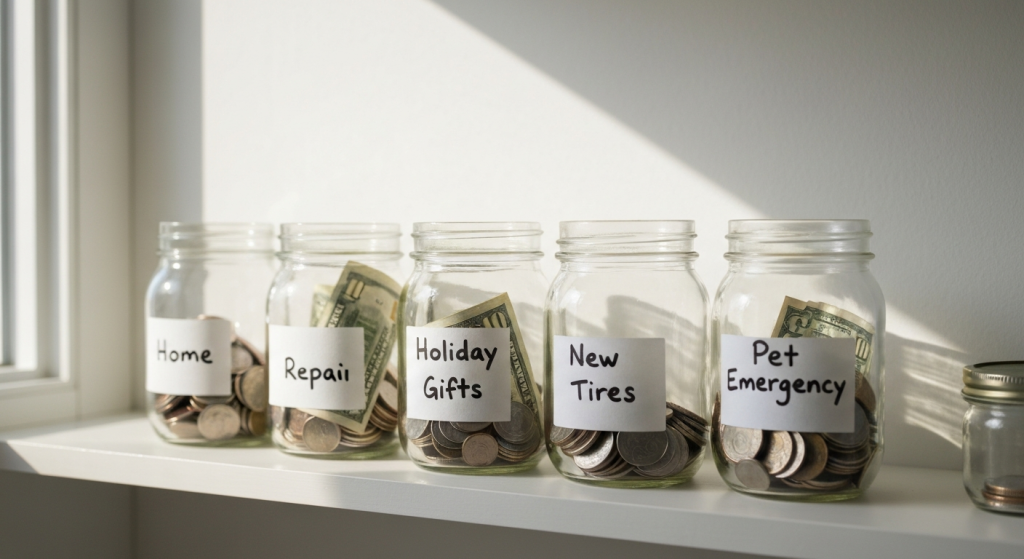
A sinking fund is a specific bucket of money you set aside for a planned future expense. Unlike an emergency fund, which covers true surprises like job loss or a sudden medical bill, sinking fund categories cover things you already know will happen.
Think about it: Christmas comes every December 25th. Your car registration renews every year. Your Amazon Prime subscription auto-renews whether you remember it or not. These aren’t emergencies. They’re predictable expenses hiding in plain sight.
The problem is that most budgets only account for monthly bills. Rent, utilities, groceries, those get a line item. But what about the $600 car insurance payment that hits every six months? Or the $1,200 you spend on holiday gifts each year? When those land, they feel like emergencies because no money has been set aside.
Sinking fund categories solve this by breaking big, irregular expenses into small monthly contributions. If holiday gifts cost you $1,200 a year, that’s $100 a month tucked away starting in January. When December rolls around, the money’s already there. No stress, no credit card debt, no guilt.
According to the Consumer Financial Protection Bureau, building savings habits around predictable expenses is one of the most effective ways to reduce financial stress and avoid high-interest debt.
The 20 Sinking Fund Categories You Should Consider

Here are 20 sinking fund categories that cover the expenses most people forget to plan for. You don’t need all 20; pick the ones that match your life and start there.
1. Car Repairs and Maintenance
Oil changes, new tires, brake pads, unexpected repairs. Budget $75–$150/month. Your car will need something eventually; this fund makes sure you’re ready.
2. Car Insurance
If you pay semi-annually or annually, divide the total by the number of months. A $720 annual premium is just $60/month set aside.
3. Car Registration and Taxes
Easy to forget, painful when it hits. Usually $100–$300/year, depending on your state. That’s $10–$25/month.
4. Holiday Gifts
Christmas, Hanukkah, birthdays for family and friends. Add up what you spent last year and divide by 12. If you spent $1,200, that’s $100/month starting in January.
5. Vacations and Travel
Whether it’s a family road trip or a weekend getaway, travel costs add up fast. Setting aside $150–$300/month means you can book without the guilt.
6. Medical and Dental
Copays, prescriptions, dental cleanings, and new glasses. Even with insurance, out-of-pocket costs pile up. Budget $50–$100/month.
7. Home Maintenance and Repairs
The general rule is to set aside 1–2% of your home’s value each year for maintenance. For a $250,000 home, that’s $200–$400/month.
8. Annual Subscriptions
Amazon Prime, streaming services that bill yearly, software licenses, and gym memberships with annual fees. List them all and divide by 12.
9. Back-to-School Supplies
Clothes, backpacks, shoes, school fees, supplies. If you have kids, this one hits hard every August. Budget $50–$100/month starting in January.
10. Pet Expenses
Vet visits, grooming, medications, and food in bulk. Pets are family, and their bills are predictable. Budget $50–$75/month beyond regular food costs.
11. Clothing
Seasonal wardrobe updates, work clothes, shoes. Instead of one big shopping spree, set aside $30–$50/month.
12. Home Furnishings
Replace worn-out furniture, upgrade appliances, and buy household items you’ve been putting off. $50–$100/month goes further than you think.
13. Property Taxes
If your property taxes aren’t escrowed into your mortgage, this one is critical. Divide your annual tax bill by 12, and save that amount each month.
14. Insurance Deductibles
Health, auto, homeowner’s. If you ever need to file a claim, can you cover the deductible? Save enough to cover your highest deductible.
15. Emergency Travel
A family emergency, a last-minute flight for a funeral, or a sick relative. Having $500–$1,000 set aside for unexpected travel brings serious peace of mind.
16. Technology Upgrades
Phones, laptops, tablets, they all have a 3-7 year lifespan. If you replace your phone every 3 years and it costs $900, that’s $25/month.
17. Wedding or Event Gifts
A wedding can drain you fast. If you attend 4–6 weddings a year at $100–$150 per gift, that’s $50–$75/month.
18. Charitable Giving
If you like to donate during the holidays or support causes throughout the year, planning your giving helps it not compete with your other goals.
19. Self-Education
Online courses, books, certifications, conferences. Investing in yourself is one of the best uses of a sinking fund. Budget $25–$50/month.
20. Fun Money Buffer
Date nights, concerts, spontaneous weekend plans. Life shouldn’t be all bills and obligations. Even $50/month in a “fun” sinking fund means you can say yes without wrecking your budget.
How to Decide Which Sinking Funds to Start With
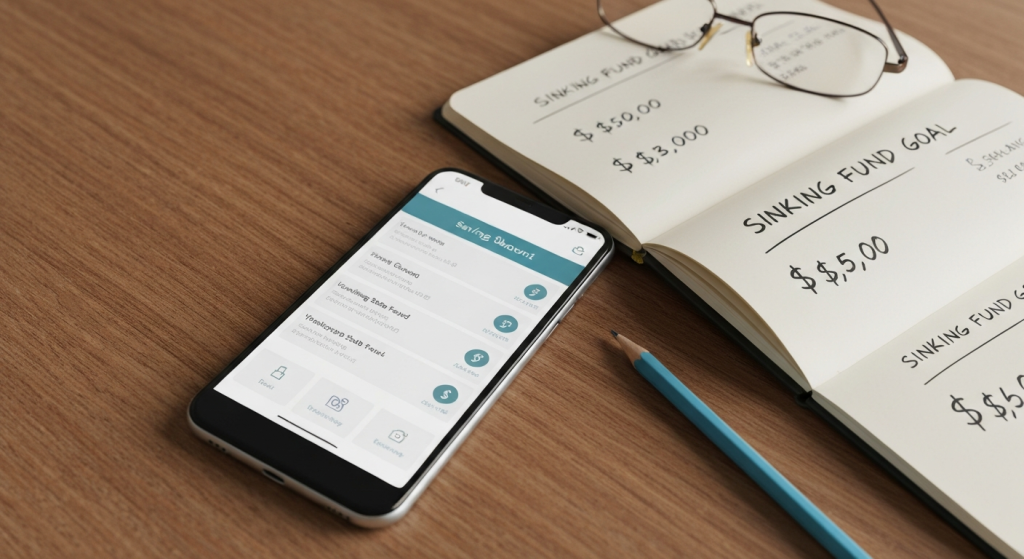
If you’re looking at this list and feeling overwhelmed, take a breath. You don’t need 20 sinking funds right now. You need the right three to five.
Here’s how I’d approach it. Pull up your bank and credit card statements from the last 12 months. Look for the expenses that caught you off guard, the ones that made you wince or reach for a credit card. Those are your first sinking fund categories.
For most people, the starting lineup looks something like this: car repairs, holiday gifts, and one annual subscription or insurance payment. That covers the expenses that hit hardest and most often.
Once those feel routine, and they will after two or three months, add another one or two. The goal isn’t to have a perfect system on day one. It’s to stop getting ambushed by expenses you saw coming.
If you want to take this further, pair your sinking funds with an automated budgeting guide system. When the money moves itself, you don’t have to think about it!
Common Mistakes People Make With Sinking Funds

I’ve made most of these myself, so no judgment here.
The first mistake is starting too many sinking fund categories at once. If you spread $200 across 10 funds, each one has $20 and none of them are actually useful when the expense hits. Start small, fund them properly, and expand over time.
The second mistake is mixing up sinking funds with your emergency fund. Your emergency fund is for true unknowns, job loss, a major medical event, something you couldn’t have predicted. Sinking funds are for things you can predict. Keeping them separate protects both.
The third mistake is failing to adjust the amounts. Life changes. Maybe you got a new car with higher maintenance costs, or your kids outgrew the back-to-school budget you set two years ago. Review your sinking fund categories every 6 months and adjust them as needed.
The fourth mistake is keeping everything in one savings account. When all your sinking funds live in a single pot, it’s hard to know what’s allocated to what. Use a bank that lets you create sub-accounts or labeled buckets, or even a simple spreadsheet. The key is visibility.
How I Organize My Own Sinking Funds

I keep it simple. I have a high-yield savings account with labeled sub-accounts for my top sinking fund categories: car maintenance, holiday gifts, vacation, and technology. Every payday, automatic transfers move set amounts into each bucket. I don’t think about it, and the money is always there when I need it.
When I first started, I had only two sinking fund categories: vacation and Christmas gifts. That was it. And even just those two made a noticeable difference. In December, I didn’t have to stress about gift money, which was honestly one of the best financial feelings I’ve had.
The point is this: you don’t need a complicated system. You need a few categories that match your life, a set amount for each, and the patience to let it build.
Start With Just One
You don’t need to overhaul your entire budget today. Pick one sinking fund category from this list, just one, and set up a small automatic transfer. Even $25 a month into a car repair fund or a holiday gift fund is a win.
Six months from now, when that expense shows up, and the money is already sitting there waiting, you’ll wonder why you didn’t start sooner. I know I did.
Frequently Asked Questions
What are sinking fund categories?
Sinking fund categories are specific savings buckets you create for planned future expenses. Instead of paying for things like car repairs, holiday gifts, or vacations all at once, you set aside a small amount each month so the money is ready when the expense arrives. Common sinking fund categories include car maintenance, medical costs, home repairs, annual subscriptions, and travel.
How many sinking funds should I have?
Start with three to five sinking fund categories that cover your biggest predictable expenses. Most people do well with car repairs, holiday gifts, and a few annual bills. You can always add more later once the habit is established. Having too many too soon spreads your money too thin.
What is the difference between a sinking fund and an emergency fund?
An emergency fund covers true unexpected events, job loss, a sudden medical bill, or a major home repair you couldn’t have anticipated. A sinking fund covers expenses you know are coming but don’t happen monthly, like car insurance premiums, holiday spending, or annual subscriptions. Both are important, but they serve different purposes.
What is the 50/30/20 rule for sinking funds?
The 50/30/20 rule suggests allocating 50% of your income to needs, 30% to wants, and 20% to savings and debt repayment. Sinking funds typically fall into that 20% savings bucket, alongside your emergency fund and retirement contributions. You can also pull sinking fund money from the 30% “wants” category if the fund is for something like vacations or fun money.
What is the best app or tool to track sinking funds?
Many people use high-yield savings accounts with sub-account features. Banks like Ally, SoFi, and Capital One 360 let you create multiple labeled buckets within one account. Budgeting apps like YNAB are also excellent for tracking sinking fund categories. Even a simple spreadsheet works if you prefer to keep it low-tech.