5 Of The Best Savings Automation Tools to Grow Your Money on Autopilot
I thought saving money came down to discipline. If I wasn’t saving, I assumed I just wasn’t trying hard enough or following my budget closely enough.
But in personal finance, relying on willpower alone almost never works, especially when life gets busy, bills pile up, and budgeting decisions happen fast. That’s exactly why my savings didn’t start growing consistently until I automated the process.
Once I set my savings to happen automatically, everything changed. Money started moving into savings before I could spend it, which made sticking to my budget much easier. I didn’t have to remember. I didn’t have to “feel motivated.” It just happened, quietly and consistently in the background.
That’s the power of automation.
Savings automation tools help you pay yourself first, remove friction from budgeting, and make setting financial goals feel achievable instead of overwhelming. Whether it’s rounding up spare change, moving money on a schedule, or using smart rules to save automatically, these tools make growing your money feel almost effortless.
In this guide, I’ll break down the best savings automation tools, explain how each one works, and help you choose the right option based on your budget, goals, and personal finance habits.
Because the easiest way to save more money isn’t trying harder, it’s setting up systems that work for you, even when you’re not paying attention.
Why Savings Automation Works So Well
When it comes to budgeting and personal finance, the biggest problem most people face isn’t lack of income; it’s inconsistency. That’s exactly why savings automation works so well.
It removes the human element from the process.
Here are six reasons why automating your savings is one of the smartest moves you can make.
1. It Removes Willpower From the Equation
Relying on motivation is unreliable. Some months, you’re disciplined. Other months, life happens.
Savings automation works because it doesn’t ask you to make repeated decisions. Once it’s set up, the money moves automatically, whether you feel motivated or not.
Less decision-making = more consistency.
2. It Helps You Stick to Your Budget
When savings happen automatically, the money is gone before you can spend it. That forces your budget to work with what’s left, which is exactly how budgeting should function.
This naturally prevents overspending and keeps your budget realistic.
3. It Supports “Pay Yourself First”
One of the most important personal finance principles is paying yourself first. Automation makes this effortless.
Instead of saving whatever is “left over” at the end of the month, savings become a priority, not an afterthought.
4. It Makes Setting Financial Goals Easier
Whether your goal is an emergency fund, a vacation, or long-term savings, automation turns big goals into small, manageable steps.
Saving $10, $25, or $50 automatically doesn’t feel painful, but over time, it adds up fast.
Progress feels automatic instead of stressful.
5. It Reduces Overspending
When money is automatically moved into savings, it’s no longer sitting in your checking account, tempting you to spend it.
Out of sight often means out of mind, and that’s a good thing when you’re trying to build better money habits.
6. It Builds Momentum Without Effort
Once you see savings growing without constant effort, confidence increases. That momentum often leads to:
- Better budgeting decisions
- Stronger financial habits
- More ambitious financial goals
Saving stops feeling like a chore and starts feeling like progress.
Savings automation works because it aligns with how people actually behave. It removes friction, reduces stress, and turns consistency into a system, not a struggle.
What to Look for in the Best Savings Automation Tools

Not all savings automation tools work the same way. I’ve learned that choosing the right one matters just as much as automating in the first place. The best savings automation tools make saving easier, flexible, and aligned with your budget and financial goals.
Here’s exactly what I look for before committing to any tool.
Here’s exactly what I look for before committing to any tool.
1. Automatic Transfers
This is non-negotiable.
The best tools move money automatically without you having to think about it. Look for options that allow:
- Scheduled transfers (weekly, bi-weekly, monthly)
- Transfers based on paycheck timing
- Easy adjustments when your budget changes
If it still requires constant manual action, it’s not true automation.
2. Round-Up vs Scheduled Saving Options
Different people save better in different ways.
Some tools:
- Round up purchases and save spare change
- Move fixed amounts on a schedule
- Use smart rules or triggers
The best savings automation tools let you choose, or combine, methods based on your habits.
3. Goal Tracking
Saving without a purpose feels pointless.
I always look for tools that allow me to:
- Create specific savings goals
- Track progress visually
- Separate money by purpose
This makes budgeting more intentional and helps with setting financial goals that actually motivate you.
4. High-Yield Savings Integration
Automation works best when your money is growing, not just sitting there.
If possible, look for tools that:
- Integrate with high-yield savings accounts
- Offer competitive interest rates
- Make transfers quick and easy
Even small interest gains add up over time.
5. Flexibility and Control
Life changes, and your savings system should too.
The best tools let you:
- Pause or adjust savings easily
- Change amounts without penalties
- Handle irregular income
Rigid systems can backfire and cause frustration.
6. Low or No Fees
Fees quietly kill progress.
I avoid tools that charge:
- Monthly subscription fees without real value
- Hidden transfer fees
- Penalties for small balances
Automation should help you save money, not eat into it.
7. Ease of Use
If a tool feels confusing, you won’t stick with it.
The best savings automation tools have:
- Clean, simple apps
- Clear dashboards
- Easy setup
If it takes more than a few minutes to understand, it’s probably not the right fit.
8. Security and Account Protection
You’re connecting your bank accounts; online security matters.
Always look for:
- Bank-level encryption
- Read-only access where possible
- Clear security policies
Peace of mind is part of good personal finance.
The best savings automation tools don’t just move money, they support your budget, reinforce good habits, and make reaching your financial goals feel automatic instead of overwhelming.
Best Savings Automation Tools to Grow Your Money on Autopilot
There’s no single savings automation tool that works best for everyone. The best savings automation tools are the ones that match how you spend, how you budget, and how hands-on you want to be.
Here are some of the top options to consider, along with who each one is best for.
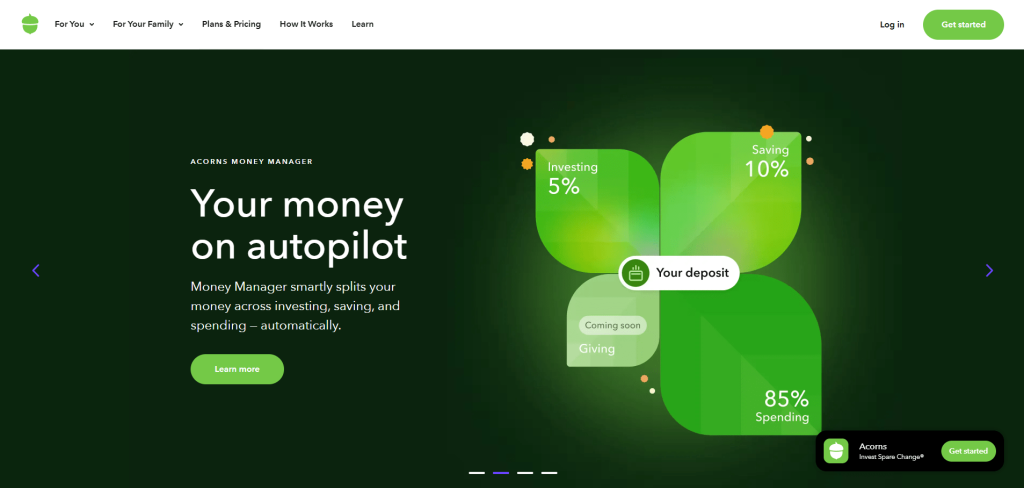
Acorns – Best for Round-Up Investing
What I like:
- Saves money without thinking about it
- Round-ups happen automatically
- Great entry point for beginners
- Combines saving and investing
Downsides:
- Monthly fee
- Less control over exact amounts
- Not ideal if you want pure cash savings
Best for:
Beginners who struggle to save and want a painless, set-it-and-forget-it approach.
Qapital – Best for Rule-Based Saving

Qapital shines if you like turning saving into a game. You create rules that automatically trigger savings, like saving money when you skip takeout or hit a step goal.
What I like:
- Highly customizable saving rules
- Makes budgeting more engaging
- Strong goal-based saving features
Downsides:
- Monthly fee
- Can feel gimmicky for some users
Best for:
People who enjoy structure, rules, and motivation tied to behavior.
Chime – Best Bank-Based Savings Automation

Chime keeps things simple by baking automation directly into checking and savings. Features like automatic transfers and round-ups make saving effortless.
What I like:
- No monthly fees
- Easy automatic savings features
- Simple budgeting-friendly setup
- Great spending alerts
Downsides:
- Limited advanced goal tools
- Fewer customization options
Best for:
People who want savings automation without using a separate app.
SoFi – Best All-in-One Automation Platform

SoFi combines automated savings with budgeting app tools, investing, and goal tracking. It’s a strong option if you like having everything in one place.
What I like:
- Automated transfers
- High-yield savings options
- Strong app experience
- Easy goal tracking
Downsides:
- Can feel overwhelming for beginners
- Best features require full ecosystem use
Best for:
People who want a centralized personal finance platform.
Capital One – Best Traditional Bank Automation

Capital One offers reliable, no-frills savings automation through scheduled transfers and multiple savings accounts.
What I like:
- Easy scheduled savings
- No complicated setup
- Trusted traditional bank
- Good for simple budgeting
Downsides:
- Fewer “smart” automation features
- Less engaging than app-based tools
Best for:
People who prefer traditional banking with basic automation.
The best savings automation tools don’t require perfection, they require consistency. Start small, automate first, and adjust later.
Best Savings Automation Tool Based on Your Situation

Instead of asking, “What’s the best savings automation tool overall?” I’ve found it’s much more helpful to ask: “What’s the best tool for how I actually save money?”
Here’s how I’d break it down.
If You’re New to Budgeting
You want something simple that doesn’t overwhelm you.
Best option:
- Chime
Why it works:
- Built-in automation
- No monthly fees
- Easy to understand
- No complicated rules
It’s a great starting point if you’re just getting comfortable with budgeting and personal finance.
If You Like Behavioral Rules and Motivation
You enjoy structure and creative triggers.
Best option:
- Qapital
Why it works:
- Custom saving rules
- Strong goal focus
- Keeps saving engaging
Great if you want saving to feel less boring and more intentional.
If You Want to Save and Invest Automatically
You’re comfortable investing small amounts.
Best option:
- Acorns
Why it works:
- Round-up investing
- Hands-off approach
- Easy long-term growth mindset
Best for people who want to build the habit of investing automatically.
If You Want Everything in One Place
You prefer a single platform for budgeting, saving, and investing.
Best option:
- SoFi
Why it works:
- Automated savings
- High-yield accounts
- Integrated tools
This works well if you like centralized control.
If You Prefer Traditional Banking
You want automation without fintech complexity.
Best option:
- Capital One
Why it works:
- Simple scheduled transfers
- Trusted bank
- No learning curve
Ideal if you value simplicity and familiarity.
The best savings automation tool is the one that fits your habits and removes friction from your budget, not the one with the most features.
How to Set Up Savings Automation the Right Way
Savings automation works best when it’s set up intentionally. I’ve learned that starting simple and building from there leads to far better results than trying to automate everything at once.
Here’s exactly how I set up savings automation so it actually sticks.
1. Start Small (Seriously)
The biggest mistake I see is trying to automate too much too fast.
I started with an amount that feels almost too easy:
- $10–$25 per week
- Or a small percentage of each paycheck (5%-10%)
Once the habit is established, increasing the amount feels natural instead of stressful.
2. Automate Right After You Get Paid
Timing matters.
I set my automated transfers to happen:
- On payday
- Or the day after
This makes saving part of my budget, not something I try to do with “leftover” money at the end of the month.
3. Separate Savings From Spending
Out of sight really does mean out of mind.
I keep automated savings in:
- A separate high-yield savings account
- Or clearly labeled goal-based accounts
This makes it less tempting to dip into savings and easier to stay disciplined.
4. Match Automation to Your Goals
Different goals need different systems.
For example:
- Emergency fund → fixed automatic transfers
- Vacation fund → round-ups or rule-based saving
- Long-term savings → scheduled monthly automation
Aligning the tool with the goal makes the process feel purposeful.
5. Increase Automation Gradually
Once saving feels normal, I slowly increase it.
That might look like:
- Increasing weekly transfers by $5–$10
- Adding a second automation rule
- Boosting savings after a raise or bonus
Small increases over time make a massive difference without budget shock.
6. Review Monthly – Not Daily
Automation doesn’t mean ignoring your money completely.
Once a month, I:
- Review balances
- Check progress toward goals
- Adjust amounts if my budget changes
This keeps everything aligned without micromanaging.
The goal of savings automation isn’t perfection; it’s consistency. Set it up once, let it run quietly in the background, and adjust as your budget and financial goals evolve.
Automate First, Then Optimize
If there’s one lesson I’ve learned in personal finance, it’s this:
Consistency matters more than intensity.
Trying to save money through pure discipline rarely works in the long term. Life gets busy, budgets change, and motivation fades. That’s why savings automation is so powerful; it removes friction and turns progress into a system instead of a struggle.
When you automate your savings:
- Your budget becomes easier to manage
- Saving stops relying on willpower
- Setting financial goals feels more achievable
- Progress happens quietly in the background
You don’t need the perfect tool or the perfect setup. You just need to start.
Pick one of the best savings automation tools, automate a small amount, and let it run. Once the habit is built, you can always adjust, optimize, and scale.
Because the easiest way to grow your money isn’t trying harder, it’s building systems that work for you, even when you’re not paying attention.
Frequently Asked Questions (FAQ)
Do savings automation tools really help you save more money?
Yes. Automation helps remove emotional spending decisions and makes saving part of your system. Many people save more simply because the money moves before they can spend it.
How much should I automate into savings each month?
Start small, even $10–$25 per week. The goal is consistency. Once your budget adjusts, you can gradually increase the amount without stress.
Do savings automation tools replace budgeting?
No. They work best alongside a budget. Automation supports your budget by making saving automatic, but budgeting still helps you plan and control spending.
What’s the difference between round-up saving and scheduled saving?
Round-up saving collects spare change from purchases, while scheduled saving moves fixed amounts at set intervals. Many people use both for different financial goals.
Can I automate savings if my income is irregular?
Yes. Some savings automation tools adjust automatically based on cash flow, while others let you pause or modify transfers easily. These are ideal for freelancers or gig workers.